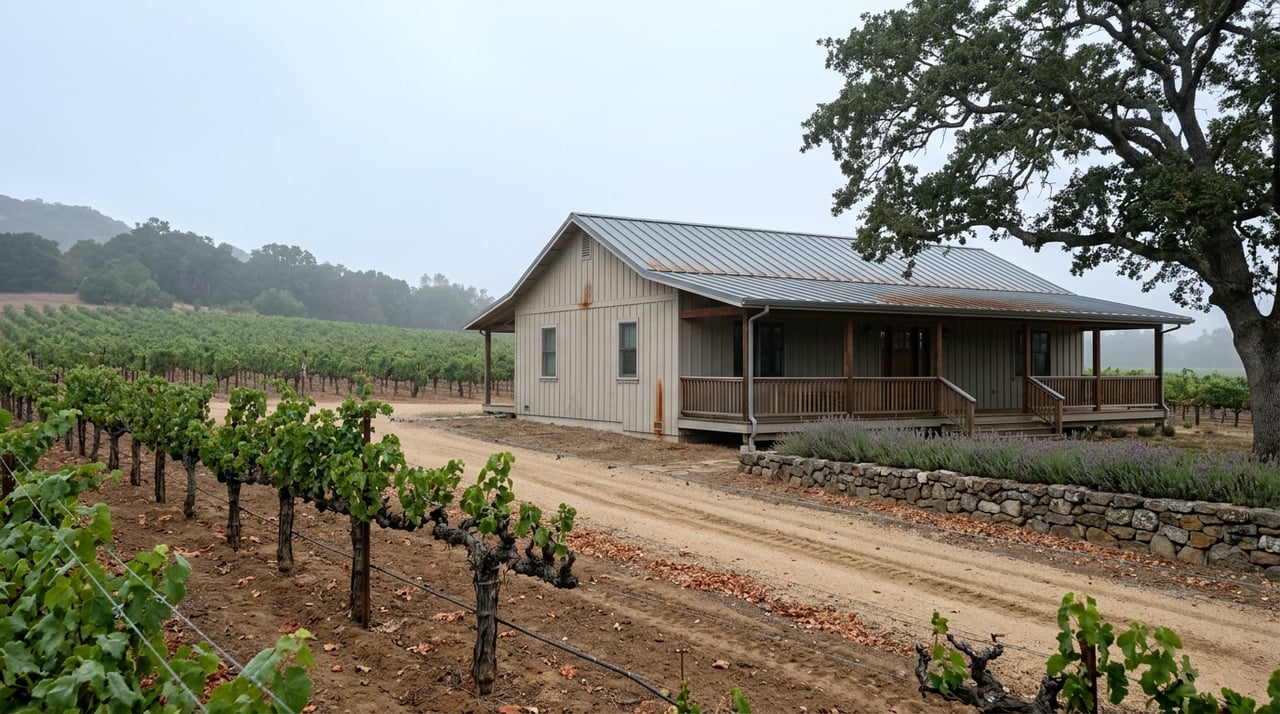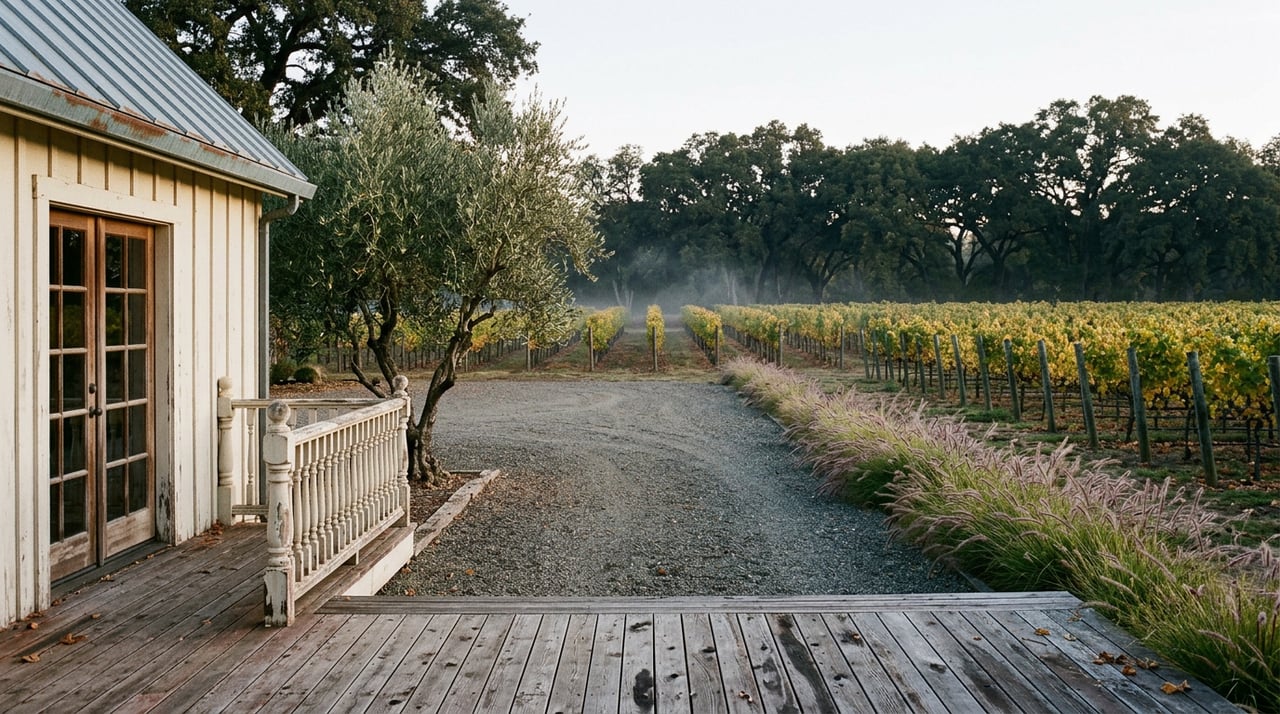
Looking at acreage in Boonville and wondering if it will truly grow great Pinot? In Anderson Valley, the difference between a trophy block and a tough site often comes down to details you cannot see from a listing. Learn how to read soils, water, microclimate, and permits so you can make a confident offer and set a realistic development plan. This guide gives you a clear, field-tested framework for evaluating plantable vineyard land in 95415. Let’s dive in.
Why Anderson Valley attracts vineyard buyers
Anderson Valley is a cool-climate Mendocino subregion known for Pinot Noir, Chardonnay, sparkling wine, and Alsatian whites. Its planted acreage is relatively small, and fruit often goes to premium producers. Plantings follow Highway 128 from Boonville toward Philo and Navarro, with marked shifts in temperature and fog along the 15 to 20 mile corridor. For context on the AVA’s strengths and scale, see the Anderson Valley Winegrowers Association’s overview of Anderson Valley and its varietal profile.
What that means for you: the terroir is proven for Pinot and sparkling styles, but site diversity is real. A block near the “deep end” toward Navarro can behave very differently from a block outside Boonville. You win by matching variety and farming to a specific slope, soil, and microclimate.
Start with climate and microclimate
Anderson Valley lives under a strong maritime influence. Cool Pacific air and fog push in from the northwest, creating large day-night temperature swings. The “deep end” near Navarro is coolest, and growers often describe the valley as later-ripening than parts of Sonoma or Napa. Review this practical climate summary on fog, diurnal range, and region classification to understand why the AVA excels with Pinot and high-acid whites.
Within the valley, you will find cooler pockets that resemble Winkler Region I conditions and slightly warmer zones around Boonville with Region II characteristics. That range drives variety choice, expected sugar and acid profiles, and likely harvest dates. Frost risk is part of the picture as well. Low-lying benches and valley-floor pockets can collect cold air, so frost fans, sprinklers, or simply selecting sites above frost benches are common solutions. Ask for local frost history, and if possible, install temporary loggers for a season.
Read the land: topography and soils
Soils are the single most site-defining factor for plantability. In Anderson Valley, lowlands carry deeper alluvial loams and gravelly terraces, while hillsides often present shallow, well-drained sandstone and shale-derived soils. Named series you will hear include Bearwallow and Wolfey on slopes, and Ornbaun or Zeni on some ridges. These map units govern drainage, rooting depth, vigor, and erosion risk.
- Hillside complexes like Bearwallow or Wolfey are typically low in nutrients and well drained. They favor concentration and finesse in Pinot, but they can limit irrigation water storage and mechanization.
- Valley-floor alluvium is deeper and more vigorous. It can deliver higher yields but often requires more canopy and disease management in fog-prone pockets.
- On steep slopes, mechanization is limited and erosion control becomes a major line item. Expect terrace work, contour drains, and careful grading to protect water quality.
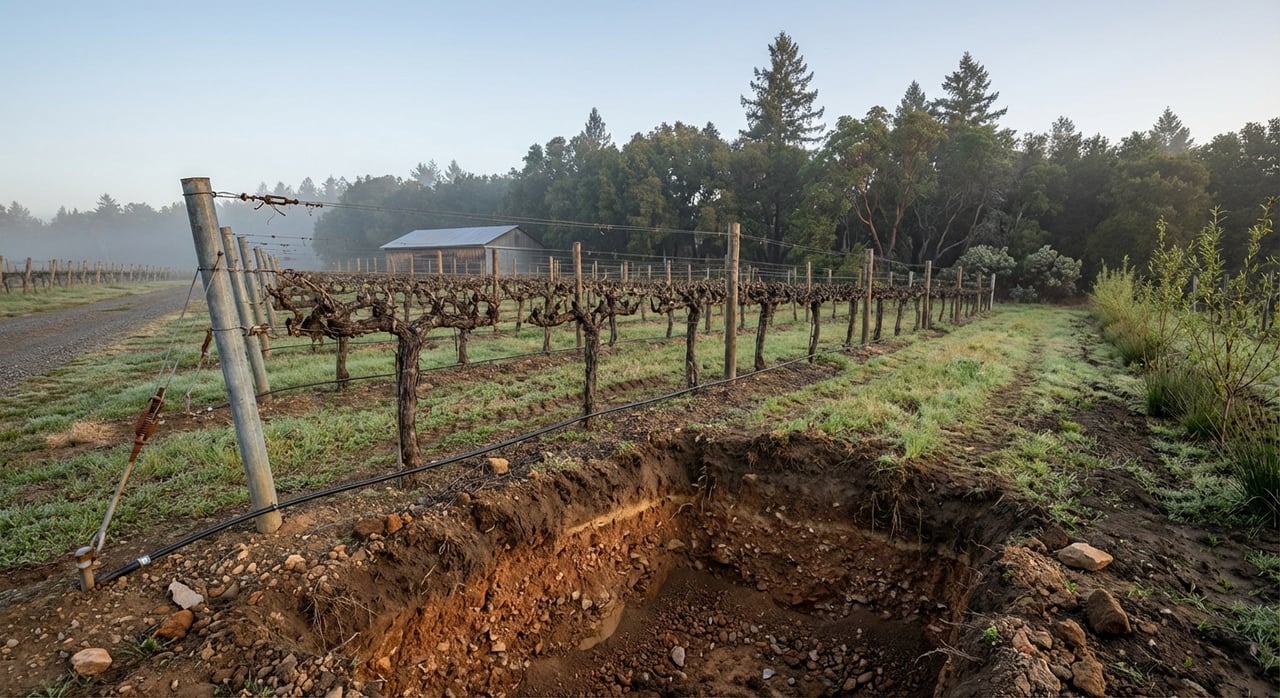
To start, pull the parcel’s soil map units with the USDA’s Web Soil Survey. Then verify in the field. A backhoe and a few test pits tell you what really matters: depth to rock or clay, drainage, and true rooting horizons. For steeper ground and hillside development norms, it helps to understand the industry’s focus on erosion control and slope constraints; the federal record for hillside vineyard development offers useful background on grading and mechanization limits on steep slopes.
Field steps for soils
- Dig soil pits across proposed blocks to see depth, rock, and clay layers.
- Sample soils for texture, organic matter, pH, and salinity.
- Walk the site after rain to observe drainage and runoff patterns.
- Map slope classes and aspect to align varieties with mesoclimate.
Water is local: wells, ponds, and rights
Vineyards here commonly rely on a mix of winter rainfall capture and groundwater. Summer is dry and supplemental irrigation is often part of quality farming, especially for establishment and yield control. Before you write an offer, ask for well logs, pump tests, pond storage capacity, and any surface diversion records tied to the parcel.
If a parcel uses a licensed or permitted diversion, California requires annual reporting through the State Water Board’s CalWATRS system. Review the current guidance on water diversion reporting and CalWATRS so you know the obligations. Groundwater governance also matters. Anderson Valley sits outside the Ukiah Valley SGMA basin, but you should still check whether your parcel falls within any prioritized area using the DWR SGMA portal. A quick GIS screen now can prevent surprises later.
Practical tip: hire a local hydrogeologist or well driller to review pump tests and seasonal yield. Ask neighboring growers about dry-year performance. Irrigation reliability sets your vine spacing, rootstock choices, and stress management plan.
Permits and entitlements in Mendocino County
Planting the vines is only half the work. County zoning, grading permits, and erosion control requirements often shape your budget and schedule. Where parcels lie in or near the Coastal Zone or along streams and steep slopes, additional permits and environmental review may apply. Mendocino County Planning & Building Services is your first stop for zoning, CEQA triggers, grading standards, and the Local Coastal Program within the coastal zone. Start your process on the county’s portal for planning and building services.
Also check whether the property is under a Williamson Act contract, which can affect taxes and permissible uses. If you plan to add a winery or tasting room, that is a separate use permit with distinct conditions and additional agency registrations. Plantable land does not automatically include winery or hospitality rights.
Two smart moves:
- Book a pre-application call with a county planner before you finalize an offer. It can reveal timeframes and likely conditions.
- For slopes above roughly 20 to 30 percent, get a professional erosion and grading assessment. The cost of roads, terraces, culverts, and BMPs can shift the economics of a project.
Yields, varieties, and market realities
Pinot Noir and Chardonnay are the historical strengths here, along with Riesling, Gewürztraminer, and Pinot Gris. The AVA is known for elegance, natural acidity, and site expression. Learn more about the AVA’s style and plantings from the Anderson Valley Winegrowers Association.
Yield is a function of site and farming. Cool, well-drained hillside sites often produce lower tonnage but higher concentration. Public grower examples for premium hillside blocks report yields in the low single digits, with some averaging around 2 tons per acre, as noted by one well-known hillside vineyard example. Valley-floor sites can carry higher yields but generally demand more canopy work to manage vigor and disease in foggy mornings.
On the sales side, pricing is cyclical across California. For statewide and North Coast context, read the recent summary of the California Grape Crush Report. Anderson Valley fruit can command quality premiums for Pinot and Chardonnay, but it does not mirror the price structure of Napa Cabernet. Your vineyard plan should pencil on quality, consistency, and relationships with buyers.
Boonville vs. the deep end: choose your zone
Within 95415, a few miles make a real difference. Warmer pockets closer to Boonville lean toward slightly earlier ripening and can accommodate a broader range of Pinot clones and rootstocks. The deep end toward Navarro stays coolest, with later harvest windows and higher natural acidity. As a rule of thumb, the mantra is simple: site trumps zip code. For a deeper orientation to the valley’s microclimates and late-ripening character, review this climate overview focused on Anderson Valley.
Budget drivers you can forecast early
Use these line items to frame the budget before you close:
- Slope and grading. Steeper ground raises costs for roads, terraces, and erosion control.
- Erosion control plans. BMPs, sediment basins, and stormwater measures are common requirements.
- Water infrastructure. Wells, pond storage, filtration, and frost protection systems add up quickly.
- Power and access. Extending service and improving drives can be significant in rural zones.
- Canopy and disease management. Fog and humidity in some pockets require more labor and sprays.
- Labor and operations. Remote locations can face seasonal labor constraints.
Compared with Sonoma or Napa, Anderson Valley often offers lower entry land costs, but development on steep or remote sites can offset that advantage. For a high-level comparison of regional tradeoffs and visitor market scale, this overview of underrated California wine regions provides helpful context.
A practical due-diligence checklist
Do this desk work before you write an offer:
- Confirm the parcel’s AVA location and adjacency. Use public AVA maps and local knowledge.
- Pull NRCS soil map units for the parcel on the Web Soil Survey.
- Check SGMA basins and local GSAs on the DWR SGMA portal.
- Search the State Water Board database and review CalWATRS reporting requirements.
- Confirm zoning, overlays, coastal zone status, and Williamson Act enrollment with Mendocino County Planning & Building Services.
Then run this field and technical work before closing, or as a contingency:
- Excavate soil pits and collect lab samples for each proposed block.
- Complete well testing and a hydrogeologist review of seasonal yield.
- Map frost pockets and fog corridors with temporary loggers; ask neighboring growers for frost history.
- For slopes above 20 to 30 percent, obtain an engineering review and a preliminary erosion control concept.
- If you plan to sell fruit, check recent pricing trends and explore potential offtake relationships with wineries. Start with statewide context like the Grape Crush Report summary and build local relationships from there.
The bottom line
Anderson Valley can deliver site-driven, premium fruit when you match the right variety and farming plan to the right ground. Your success hinges on a disciplined read of soils, slope, microclimate, water reliability, and permits. With the right due diligence and local advisors, you can turn a Boonville acreage into a vineyard that holds its value and produces distinctive wine year after year.
Considering plantable acreage or a working vineyard in 95415? For a discreet, expert-led search and introductions to local viticulture, hydrogeology, and permitting specialists, connect with Kevin McDonald.
FAQs
What makes land “plantable” in Anderson Valley?
- A parcel is typically considered plantable when soils have adequate depth and drainage, slopes can be stabilized with feasible erosion control, water for establishment and frost protection is reliable, and zoning and permits allow vineyard development under Mendocino County rules.
How do you evaluate frost risk on a Boonville parcel?
- Combine site history from neighboring growers with data from temporary temperature loggers placed in low spots for a season, and budget for frost fans or sprinkler protection where cold air pools on valley floors and benches.
Do you need irrigation to grow Pinot in Anderson Valley?
- Summer is dry, and most vineyards plan on supplemental irrigation for vine establishment and yield/quality control; confirm well capacity, pond storage, and any surface diversions early in diligence.
Are special permits required to plant vines in Mendocino County?
- Yes. Grading and erosion control permits are common on sloped sites, and additional approvals may apply in the Coastal Zone or near streams; winery or tasting uses require separate use permits beyond agricultural planting.
How do yields in Anderson Valley compare with Sonoma or Napa?
- Cool hillside sites in Anderson Valley often produce lower tonnage with higher concentration, with some premium blocks averaging around 2 tons per acre; valley-floor sites can yield more but typically require more canopy and disease management.