If you are buying, selling, or repositioning a property in Mendocino County for hospitality use, the biggest mistake is assuming the story comes first. Here, the best opportunities start with zoning, overlays, access, and infrastructure, then grow into a clear hospitality concept that the site can actually support. If you understand that sequence early, you can avoid costly guesswork and present the property with far more confidence. Let’s dive in.
Start With the Right Rulebook
Mendocino County does not use one simple countywide standard for hospitality uses. The Planning Division separates land use rules into Division I for inland parcels, Division II for the Coastal Zone, and Division III for the Town of Mendocino. That means the same idea can have a very different path depending on where the parcel sits.
For buyers and sellers, this is where positioning begins. Before you call a property an inn, retreat, lodge, or short-term rental candidate, you need to confirm the parcel’s zoning designation and any overlay rules that apply. The county recommends using the Zoning Lookup Tool, requesting a Letter of Zoning, or scheduling a Pre-Application Conference when the project is more complex.
That extra step matters even more now because the county notes the Inland Zoning Code was formally adopted on September 10, 2024. In practical terms, you should treat parcel-level verification as current due diligence, not as a box to check later.
Match the Property to the Use
The strongest hospitality properties in Mendocino County are not the ones with the most ambitious marketing language. They are the ones where the physical site, legal use type, and guest experience all line up. Privacy, views, architecture, acreage, circulation, and access all matter most when they reinforce a use the county can support.
In the inland code, several hospitality-oriented uses fall under Transient Habitation. These include Campground, Lodging (Limited) for 3 to 6 rooms, Lodging for 7 or more rooms, and Resort and Recreational Facilities. County definitions also use a 30-day threshold to separate transient lodging from longer-term occupancy.
That gives you an early framework for evaluating opportunity. A small compound with a modest room count may fit a very different category than a larger inn or destination-style property, and that difference can shape both entitlement strategy and buyer demand.
Inland Properties
For inland parcels, room count and access can quickly change the picture. Smaller hospitality concepts may look appealing on paper, but the county’s accessory-use rule for Room and Board allows not more than two rooms for transient guests only if the parcel has frontage on a publicly maintained road. If it does not, a Use Permit is required.
That means road frontage is not just a convenience factor. It can be part of the entitlement test itself. For rural properties with long private drives or more remote settings, this should be reviewed before anyone builds a revenue story around guest stays.
Coastal Properties
Coastal properties require a more careful lens. In addition to zoning, there is a Local Coastal Program layer, and the county states that Coastal Development Permits may be required in the coastal zone.
For new visitor-serving facilities outside the Town of Mendocino’s mapped sites, the process can be even more involved. The county says a project may first need a Local Coastal Program amendment before a Coastal Development Permit application can be filed. For a buyer or seller, that is a major distinction because it affects timing, risk, and value.
The coastal framework also places strong emphasis on compatibility with the natural setting and surrounding development. In some cases, a small inn may visually fit into its setting more easily than a campground or RV-oriented concept, which may require more screening or a location outside the viewshed.
Town of Mendocino Properties
The Town of Mendocino has its own definitions and mapped visitor-serving rules. In the town code, Vacation Home Rental means an entire dwelling rented for 29 days or fewer, and no new vacation home rentals are permitted in residential zoning districts.
The town also keeps hotel, inn, and bed-and-breakfast sites within a mapped Visitor Serving Facilities Combining District. This matters because a property that seems like a hospitality asset in marketing terms may fall into a very different category under the code. In other words, a legacy visitor site, a whole-house rental concept, and a traditional inn are not interchangeable here.
Use Types That Often Make Sense
When you position a Mendocino County property well, you are not trying to make it sound like everything at once. You are identifying the most plausible hospitality identity based on the parcel, the code, and the improvements already in place.
Depending on location and zoning, common hospitality frames may include:
- Boutique inn
- Bed-and-breakfast
- Limited-room lodging concept
- Retreat center
- Resort or recreational facility
- Campground
- RV or tent-based guest use
- Glamping-style accommodation
- Wellness-oriented lodging compound
The county code already distinguishes between many of these concepts. That is why the marketing story should mirror the legal and physical reality of the site instead of stretching toward a broader label that may not hold up under review.
Underwrite Access and Infrastructure Early
In Mendocino County, guest experience begins well before check-in. Access, utilities, and site function can shape feasibility just as much as architecture or branding.
County road standards apply to road improvements and other project-related improvements that need county authorization. The county’s emergency-preparedness guidance also notes that responders may be delayed by road closures, landslides, or fires, and residents should be prepared to be self-sufficient for 3 to 5 days.
For hospitality positioning, that means you should review:
- Driveway geometry
- Turnaround space
- Parking capacity
- Emergency access
- Evacuation logistics
- Public road frontage where relevant
A beautiful rural setting can be a major asset, but only if circulation and access work for guests, operations, and public safety.
Do Not Overlook Water, Septic, and Guest Services
Infrastructure can quickly redefine the business case for a hospitality property. Environmental Health is the county department to check for land-use-related water well and septic questions, and its consumer-protection role also covers food facilities and pool or spa permits.
This is especially important for boutique inns, retreats, and multi-building compounds. If your concept includes breakfast service, a commercial kitchen, spa amenities, or event-related food operations, those features can trigger approvals beyond the base land use question.
For sellers, this can be a strong value point when documentation is organized and clear. For buyers, it is a reminder that operating potential depends on more than bedroom count and aesthetics.
Account for Taxes and Licensing
A hospitality property is also an operating business framework, not just a real estate asset. In unincorporated Mendocino County, lodging operators generally need a county business license, and the county’s business-license system includes a motel, hotel, and rental category for structures designed for transient occupancy.
Tax structure matters too. Mendocino County’s transient occupancy tax is 8%, and the code authorizes an additional 2% county occupancy tax. The county also administers a lodging Business Improvement District with a 1% gross room-rent assessment where the property falls within the BID’s boundaries.
The county’s transient occupancy tax definition is broad and includes private campgrounds, RV parks, tent sites, glamping-style accommodations, and similar structures. If you are evaluating an experiential hospitality concept, these operating costs should be part of underwriting from the beginning.
Treat Fire Exposure as a First-Pass Filter
Wildfire planning is part of hospitality positioning in Mendocino County, not just a post-contract insurance question. CAL FIRE’s Fire Hazard Severity Zone maps classify areas as moderate, high, or very high hazard, and the county’s coastal-zone information directs owners to CAL FIRE for fire-safe regulations.
For buyers, this can affect site planning, defensible space expectations, and operating risk. For sellers, a property presentation is stronger when it shows clear awareness of access, vegetation, and emergency-readiness factors that matter to rural and coastal buyers.
Be Careful With Short-Term Rental Assumptions
Short-term rental conversations in Mendocino County require precision. County planning materials state that the only existing short-term rental regulations are in the Coastal Zone and the Town of Mendocino, while the county’s ordinance-updates page says an Inland Short-Term Rental Ordinance project is active.
That means older assumptions may not travel well from one transaction to the next. If a property is being marketed for whole-house rental potential or as a future lodging conversion, the permit path should be confirmed with the county for that exact parcel and at that exact time.
Build the Story After Feasibility
Once zoning, overlays, access, infrastructure, and permit path are clearer, you can build a better hospitality narrative. In Mendocino County, the most compelling property story is usually the most specific one.
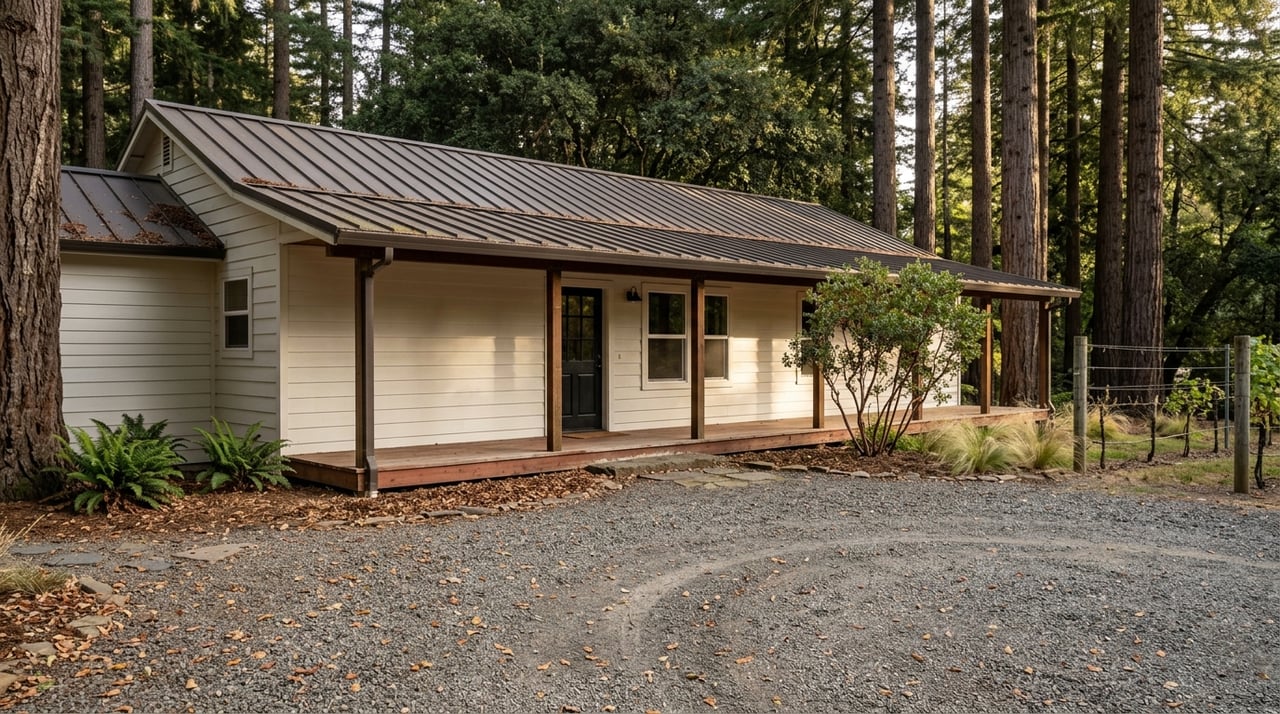
A forested inland compound may read best as a retreat center or limited-room lodge. A coastal parcel may be better framed as a visitor-serving site with a narrow but valuable entitlement lane. A larger acreage with cabins, open land, and circulation may support a campground, guest ranch, or glamping-style concept more naturally than a traditional inn story.
This is where thoughtful brokerage matters. The right positioning protects credibility, helps buyers underwrite with more confidence, and often improves how a unique asset is presented to the market.
A Smarter Order of Operations
If you want to position a Mendocino County property for hospitality use, the best sequence is usually simple:
- Confirm zoning and overlays
- Confirm the most plausible use type
- Confirm access and infrastructure
- Confirm the permit path
- Build the brand and revenue story
That order can save time, reduce false starts, and create a much stronger offering package. It also aligns with how sophisticated buyers tend to evaluate rural and hospitality properties in this market.
If you are considering a sale, acquisition, or repositioning strategy for a hospitality asset in Mendocino County, working with an advisor who understands both land use nuance and premium property marketing can make the process far more effective. To discuss your property or search with Kevin McDonald, reach out for a discreet, informed conversation.
FAQs
What zoning should you check for hospitality use in Mendocino County?
- You should first confirm whether the parcel falls under inland rules, Coastal Zone rules, or the Town of Mendocino code, then verify the zoning designation and any overlays that affect visitor-serving or transient lodging uses.
Can a Mendocino County home automatically be used as a short-term rental?
- No. The county states that existing short-term rental regulations are in the Coastal Zone and the Town of Mendocino, and an Inland Short-Term Rental Ordinance project is still active, so parcel-level confirmation is essential.
What hospitality property types are recognized in Mendocino County?
- Depending on location and code section, recognized concepts can include campgrounds, limited-room lodging, larger lodging properties, bed-and-breakfast accommodations, hotels, inns, hostels, resorts, and recreational facilities.
Why does road access matter for Mendocino County hospitality property?
- Access can affect both guest operations and entitlement. For example, the inland accessory-use rule for transient guest rooms ties certain allowances to frontage on a publicly maintained road.
What taxes apply to transient lodging in Mendocino County?
- Mendocino County’s transient occupancy tax is 8%, the code authorizes an additional 2% county occupancy tax, and some properties may also fall within a lodging Business Improvement District with a 1% gross room-rent assessment.
What should buyers review before buying a hospitality property in Mendocino County?
- Buyers should review zoning, overlays, use definitions, access, water, septic, fire exposure, business-license requirements, tax obligations, and any separate approvals tied to food service, pools, spas, or similar guest amenities.