If you are thinking about selling an Anderson Valley vineyard or estate, you are not just putting real estate on the market. You are presenting land, infrastructure, operating history, and often a legacy asset that buyers will examine in detail. The more organized you are before launch, the better positioned you will be to protect value, answer questions quickly, and attract serious buyers. Let’s dive in.
Start With the Full Asset Story
In Anderson Valley, buyers rarely evaluate a property on beauty alone. They tend to look at three separate layers of value: the land itself, the operating performance, and the estate or lifestyle component. A strong sale strategy makes each layer easy to understand.
For the land story, that means clear information on soils, water, slope, block layout, and climate context. For the income story, buyers will want to see yields, tonnage, pricing, and sales channels. For the estate story, they will look at the home, guest infrastructure, privacy, and any lawful supporting uses that are already in place.
Anderson Valley’s AVA status is an important provenance marker, but it should be used accurately. The federal AVA framework recognizes the area as a defined grape-growing region with distinguishing physical and climatic features, which supports identity and origin, not a blanket claim of superior quality.
Build a Buyer-Ready Diligence Package
The cleanest vineyard and estate sales usually begin well before the listing goes live. In practice, a 12 to 24 month preparation window is often helpful because it gives you time to gather records, update tests, and resolve missing paperwork. That timing is not a legal deadline, but it is a practical planning assumption based on the documentation buyers commonly request.
A buyer-ready package helps you avoid delays, reduce uncertainty, and show that the property has been thoughtfully managed. It also gives your broker stronger material for marketing, buyer screening, and pricing strategy.
Gather production and financial records
If the property includes a producing vineyard, start with operating history. California appraisal guidance points to 3 to 7 years of production and marketing data as a useful range for analysis. That means pulling together records on yields, tonnage, grape pricing, sales channels, and operating expenses.
This information helps buyers and appraisers evaluate consistency and earning potential. It also helps separate short-term fluctuations from longer-term trends, which is especially important for agricultural assets.
Separate land, vines, and improvements
A vineyard is not valued as one simple lump sum. It is more useful to break the property into land value, vine value, and non-living improvements such as trellising, irrigation, stakes, and frost protection. When the operating data are strong, income analysis may become a more meaningful part of valuation.
This breakdown also sharpens your presentation. A buyer may love the site but question the age of the plantings, or value the established infrastructure even if they plan to rework part of the vineyard. Clear categories make those conversations easier.
Document Water and Soils Carefully
In the 95415 area, water documentation often matters just as much as vineyard history. The Anderson Valley Groundwater Basin is relatively small, and buyers will want a factual picture of supply, well performance, and testing history. In a rural transaction, uncertainty around water can slow momentum fast.
A strong file should include your most recent water test from an ELAP-certified lab, plus well log or completion information, pump details, yield information, and any remediation records. The State Water Board recommends annual testing for private domestic wells, which gives buyers a familiar benchmark for evaluating current conditions.
Include current soil information
Soils are another core part of the property story. The NRCS Web Soil Survey is the authoritative source for soil survey information and can help you print maps and descriptions for the parcel. In some cases, it also makes sense to add a consultant soil profile or pit report if buyers will likely want a more site-specific analysis.
Anderson Valley soils can directly shape buyer interest, especially for vineyard investors and experienced operators. A current soil map gives them a factual starting point and helps support any discussion about existing vine performance or future planting potential.
Verify Permits and County Records
Rural buyers tend to ask for more than a deed and a disclosure packet. They often want a working file of county records that shows how the property has been permitted, improved, and maintained over time. If those records are incomplete, it is usually better to find that out before the property is marketed.
In Mendocino County, that can include septic permit status, water-well application history, building permit records, and any Transfer of Ownership for Land Use Sites paperwork. County land-use resources centralize many of the water-well and septic forms buyers expect to review, and the county building division handles construction permit review in the unincorporated county.
Check contract and preserve status
If the parcel is subject to an agricultural preserve or a Williamson Act-style contract, gather that documentation early. Buyers will want to understand the current contract status and whether there are any compatible-use approvals attached to the property.
This matters because county policy is clear that approved uses on contracted land must not significantly compromise long-term productive agricultural capability. If you are marketing future possibilities, those possibilities should be grounded in the actual county framework, not in assumptions.
Be Careful With Repositioning Claims
One of the easiest ways to weaken a vineyard or estate listing is to oversell future use without backup. In Mendocino County, categories such as winery use and lodging use are distinct, and tasting rooms are tied to winery use rather than automatically bundled with every rural estate. That means repositioning potential should be tested and documented, not presented as a certainty.
If your property has guest structures, event-style spaces, or a compelling hospitality feel, that can still be valuable in the marketing story. The key is to present lawful existing features clearly and avoid implying approvals that do not exist.
This is especially important for sophisticated out-of-area buyers. They often move quickly when they trust the information, and they step back just as quickly when the use case feels speculative.
Organize Brand and Label Assets
Some Anderson Valley sales involve more than land and buildings. If the transaction includes a winery brand, direct-to-consumer identity, or label portfolio, then intellectual property should be treated as its own workstream. Done well, this can add clarity and potentially value.
Your file may need to include trademark registrations, label approvals, domain names, social accounts, and any brand-usage agreements. Trademark assignments should transfer with the goodwill of the business, and buyers will want a clear chain of title before they underwrite that part of the deal.
Understand Anderson Valley labeling rules
If branding depends on Anderson Valley provenance, label compliance matters. Federal wine labeling rules state that an AVA appellation requires at least 85% of the wine to come from grapes grown in that AVA. They also state that a brand name using a vineyard, orchard, farm, or ranch name generally requires 95% of the wine to come from that named source unless the company name matches the brand.
Those details can affect how a buyer values existing inventory, future branding, and transferability. If your sale includes a wine brand, these rules should be organized and explained before going to market.
Know What Drives Vineyard Value
Buyers and appraisers often focus on many of the same fundamentals. California appraisal guidance points to climate, soil, irrigation, frost protection, production history, competition, vine spacing, productive life of the plantings, and method of marketing as core valuation drivers. These are the facts that usually shape price discussions.
Comparable sales still matter, but vineyard valuation can move toward an income-based analysis when the operating history is strong enough. That is one reason accurate records are so important. A beautiful brochure can create interest, but reliable data helps support price.
Timing can influence presentation
The best time to prepare is before you need to sell. Giving yourself room to clean up files, refresh tests, verify permits, and organize operating records usually leads to a stronger first impression once the property is launched.
In higher-value rural and vineyard sales, first impressions are not just visual. They are procedural. A buyer who sees a complete and orderly package is more likely to view the property as credible, well run, and worth deeper attention.
Market the Property With Precision
An Anderson Valley vineyard or estate deserves more than a standard residential listing approach. The strongest campaigns usually combine an executive summary, high-resolution aerial and block imagery, water and soil exhibits, permit abstracts, and a dedicated section for any brand or IP transfer. This kind of presentation reflects how serious buyers actually evaluate the asset.
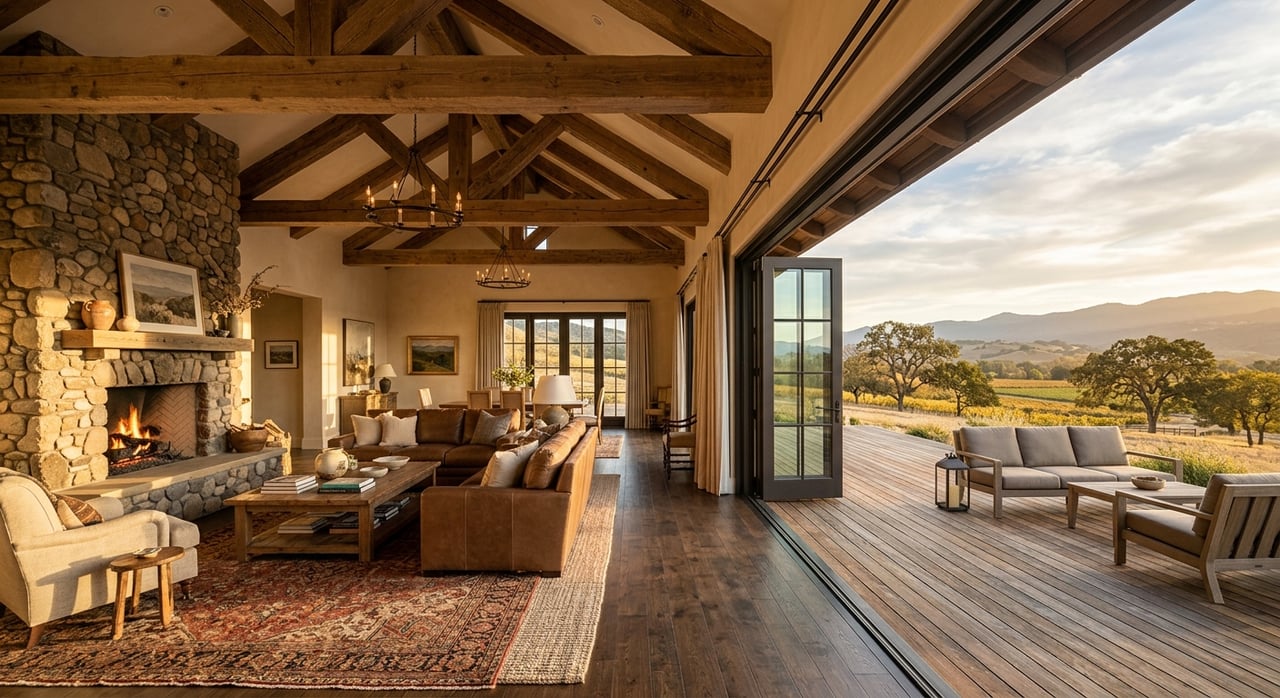
It also helps reach more than one buyer profile at once. A lifestyle buyer may respond first to privacy, architecture, and setting, while an investor may focus on soils, water reliability, and production history. A well-structured campaign can speak to both without confusing the message.
For distinctive wine-country property, marketing should balance storytelling with evidence. Anderson Valley has real global appeal, but the story is strongest when it is supported by documentation, not just romance.
If you are preparing to sell an Anderson Valley vineyard or estate, the right strategy starts long before the listing goes live. Thoughtful diligence, accurate positioning, and elevated presentation can help you protect value and reach the right buyers with confidence. When you are ready for a discreet, data-driven approach to a complex wine-country sale, connect with Kevin McDonald.
FAQs
What records do buyers want when selling an Anderson Valley vineyard?
- Buyers commonly want 3 to 7 years of yields, tonnage, grape prices, sales channels, and operating expenses, along with records that separate land, vines, and non-living improvements.
What water documents matter for an Anderson Valley estate sale?
- The most useful file usually includes a recent ELAP-certified water test, well log or completion report, pump and yield information, and any remediation records.
What county permits should you check before selling rural property in Mendocino County?
- Sellers should review septic permit status, water-well application history, building permit records, and any Transfer of Ownership for Land Use Sites paperwork relevant to the parcel.
What does Anderson Valley AVA status mean for a property sale?
- AVA status identifies Anderson Valley as a defined grape-growing region with distinguishing geographic and climatic features, which supports origin and provenance but does not guarantee wine quality.
What label rules matter if a vineyard sale includes a wine brand?
- Key federal rules include the 85% standard for AVA appellation use and the 95% standard that generally applies when a brand uses a named vineyard, farm, orchard, or ranch source.
How long should you prepare before listing an Anderson Valley vineyard or estate?
- A practical planning window is often 12 to 24 months, which can give you time to organize records, update tests, verify permits, and prepare a cleaner diligence package.