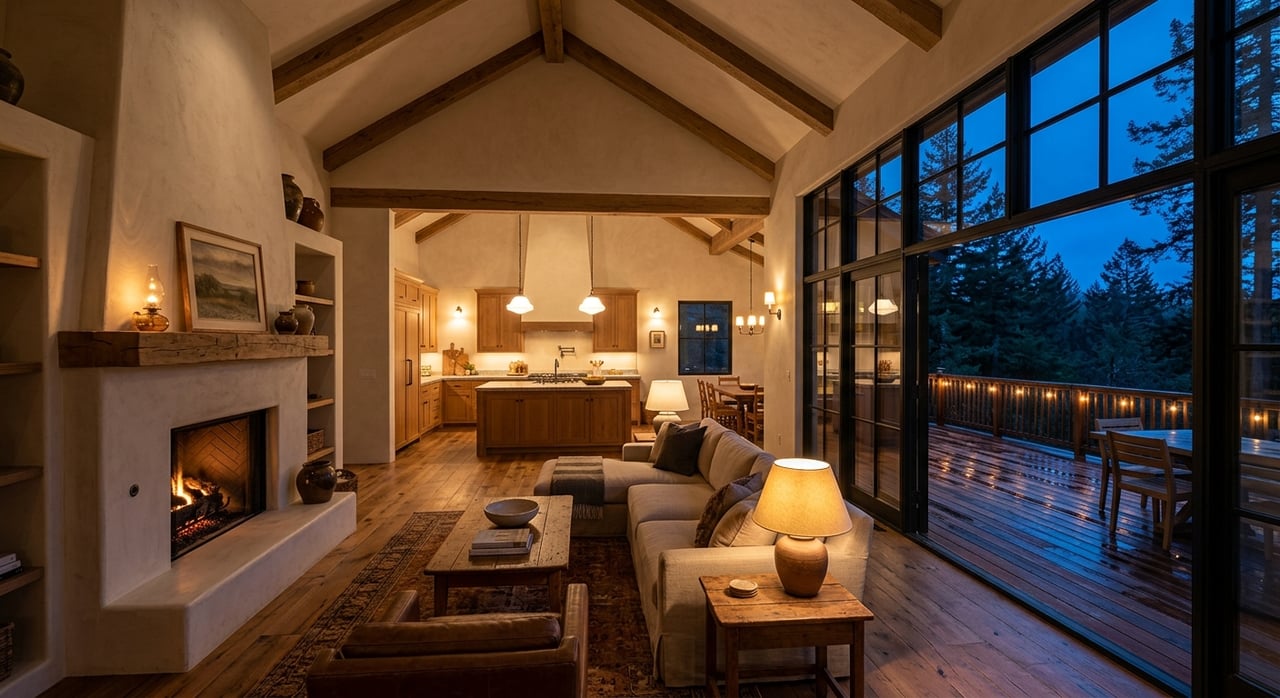
If you are dreaming about a Calistoga getaway that helps offset ownership costs, the details matter more here than in many other wine-country markets. It is easy to assume a spa-town home could double as a weekend rental, but Calistoga has specific rules that sharply separate ordinary homes from legal lodging uses. If you are considering a purchase with rental potential, this guide will help you see what is realistic, what needs deeper review, and where the best opportunities may be. Let’s dive in.
Why Calistoga rental strategy is different
Calistoga is in Napa County, not Sonoma County, and that distinction matters when you are evaluating property use. Within Calistoga city limits, the city’s municipal code controls short-term rental and lodging rules. If a property sits outside city limits in unincorporated Napa County, county rules apply instead.
That split is important because buyers often lump "Calistoga" into one broad lifestyle market. In practice, a home inside the city and a home just outside it can face different use standards. Before you underwrite any income scenario, you need to confirm exactly where the property is located and which local rules govern it.
Short-term rentals are not allowed in Calistoga homes
For properties inside Calistoga city limits, the city prohibits short-term rentals. The code defines a short-term rental as a dwelling unit, or part of one, rented for 30 consecutive days or less. The city also bars booking platforms from completing or facilitating unauthorized short-term rental transactions.
For you as a buyer, the takeaway is simple. A standard house in Calistoga should not be viewed as a legal Airbnb-style income property. If your purchase only works financially with nightly or weekend rental income, that is a major red flag.
Violations can also add up quickly because each day of a violation may be treated as a separate offense. That makes rule-checking part of basic due diligence, not a minor detail to sort out after closing. In this market, legal use is central to value.
Legal lodging uses are a separate category
Calistoga does allow some lodging uses, but they are not treated the same as ordinary residential occupancy. The zoning code identifies bed-and-breakfast inns and facilities as a distinct lodging use with overnight accommodations for paying guests, no more than one meal per day, and stays of no more than 30 days per individual rental.
That distinction matters because a home that looks ideal for guests is not automatically approved for guest lodging. In the residential zones most relevant to house buyers, including R-1, R-2, R-3, and RR-H, bed-and-breakfast use is generally not allowed by right. Instead, it requires a discretionary use permit.
A discretionary permit is not a box-checking exercise. The city’s process requires a complete application and a Planning Commission public hearing, and approved permits can carry conditions that may later be monitored, enforced, modified, or even revoked if violated. If you are pursuing this path, you should treat it like a true entitlement review, not a casual future option.
Parking can limit lodging potential
Even if a property seems physically suited for guest use, parking can become a practical constraint. Calistoga requires two parking spaces for the owner or resident manager, plus one space for each rental room in a bed-and-breakfast use.
That means layout and site design matter. A charming home on a compact lot may not have the parking capacity to support a regulated lodging concept. For buyers looking at hospitality-oriented use, parking should be one of the first filters, not one of the last.
ADUs may support long-term income
If your goal is rental flexibility rather than nightly stays, an ADU may be more relevant than a short-term lodging concept. Calistoga states that ADUs and JADUs may be rented for 30 days or more if the owner obtains a business license. The city also clearly states that short-term rentals are not allowed.
This creates a more grounded path for income planning. An ADU may support longer-term rental income that helps offset ownership costs, but it is not a legal workaround for vacation-rental use. If you are buying a second home, that distinction should shape your budget, financing assumptions, and property search.
JADUs are less flexible for part-time owners
JADUs come with an additional limitation. The city states that the owner must live on the property, either in the main home or in the JADU itself.
For a buyer who plans to use Calistoga as a part-time retreat, that rule may reduce the practical appeal of a JADU strategy. In many cases, an ADU offers a cleaner fit than a JADU if your goal is to balance personal use with lawful longer-term rental income.
What to look for in a rental-potential property
If you are shopping with income in mind, it helps to sort properties into realistic categories.
Best-fit properties
The strongest fit usually falls into one of these buckets:
- A personal second home with an ADU that could support 30-plus-day rental income
- A property already approved and operating as a bed-and-breakfast or similar lodging use
- A property with a documented entitlement history that clearly supports its current or intended use
These scenarios align better with Calistoga’s rules and reduce the risk of buying based on assumptions.
Conditional-fit properties
Some homes may have potential, but only with careful review:
- Residential properties where a bed-and-breakfast use permit may be possible
- Parcels with enough parking and site functionality to support regulated lodging use
- Homes where prior approvals may exist but need verification for status and conditions
In these cases, the opportunity is not automatic. You would want to confirm zoning, permit history, active conditions, and site constraints before assigning value to future income.
Poor-fit properties
Some situations should prompt immediate caution:
- Any purchase that depends on nightly or weekend short-term rental income in a standard residential setting
- A second home plan built around online booking activity for stays under 30 days
- Properties subject to private restrictions that limit rental or guest use
In Calistoga, wishful underwriting can be expensive. The safest path is to model income only from uses that are clearly allowed.
Zoning and permit history come first
A property’s zoning classification is your first major checkpoint. Calistoga separates ordinary residential districts from districts intended for visitor accommodations or hotel-condominium uses. A home may look like a lodging candidate and still be zoned as a standard residence.
If a seller or marketing package suggests guest-use potential, you should verify that claim through the property’s zoning and permit record. In residential districts, bed-and-breakfast use is generally discretionary, not automatic. That means the real value is not in the idea of future use, but in what has actually been approved.
Prior permits need close review
If a property has any prior lodging entitlement, do not stop at hearing that a permit exists. You should confirm whether the approval is still active and whether any conditions attach to it.
That matters because Calistoga says use permits may be conditioned, monitored, modified, or revoked after notice and hearing if the conditions are violated. A permit with restrictive operating conditions or uncertain status can materially change the property’s practical value.
HOA and private restrictions still matter
Even when local law allows a use, private restrictions can narrow or block it. Napa County notes that CC&Rs may govern monthly charges, common-area use, architecture, landscaping, and many other aspects of property use.
For you as a buyer, this means city compliance is only part of the picture. If a home is in a development or subject to recorded restrictions, those documents need to be reviewed early. A rental strategy that works on paper under city rules may still fail under private governing documents.
Outside city limits, county rules change the equation
If the property is outside Calistoga city limits in unincorporated Napa County, do not assume more flexibility. Napa County says it adopted an ordinance in 2010 prohibiting the advertising, negotiation, and rental of dwelling units for fewer than 30 consecutive days.
The county also notes that operators must register and obtain a Certificate of Authority for transient occupancy tax purposes when applicable, but that certificate does not legalize an otherwise unlawful use. In other words, paperwork does not create permission. You still need the underlying use to be lawful.
Be careful with occupancy assumptions
Buyers are often tempted to look at local tourism demand and back into rosy rental projections. Calistoga’s transient occupancy tax reporting shows citywide lodging occupancy generally running in the mid-50% to low-60% range in recent reporting periods. Those figures reflect aggregated lodging performance across the city’s regulated lodging market.
That data can provide context, but it should not be treated as a projection for a house you are considering. The city states that operator-level data is confidential, and these figures are not home-rental comparables. A legally entitled lodging property, a boutique inn, and a standard residence are very different assets.
Taxes affect net income too
If you are evaluating a legal lodging property, revenue is only one side of the equation. Calistoga says it levies a 13% transient occupancy tax on qualifying room rentals of less than 30 days, plus a 2% Napa Valley Tourism Improvement District assessment on gross room rentals. The city also states that Measure D dedicates an additional 1% to housing programs and services.
Those costs matter when you are analyzing yield. Gross nightly revenue can look attractive at first glance, but regulated lodging economics should always be evaluated on a net basis after taxes, fees, operating demands, and permit compliance.
A smart way to underwrite a Calistoga purchase
In most cases, the strongest way to view a Calistoga spa-town home is as a lifestyle purchase first. If income is part of your plan, it is usually more realistic to underwrite the property as either a personal-use home with possible longer-term ADU income or as a true lodging asset that is already entitled for that use.
That approach protects you from overpaying based on income the property cannot legally produce. It also helps you compare opportunities more clearly, especially when deciding between a classic second home, a hybrid-use property, and an established hospitality asset.
In a market like Calistoga, clarity creates leverage. When you understand the difference between residential use, long-term rental potential, and regulated lodging use, you can pursue the right property with much more confidence.
If you want a clear-eyed review of a Calistoga property’s use potential, zoning fit, and positioning as a lifestyle or hospitality asset, Kevin McDonald can help you evaluate the opportunity with the discretion and detail complex wine-country purchases require.
FAQs
Can you use a normal Calistoga house as a short-term rental?
- No. Within Calistoga city limits, the city prohibits short-term rentals of 30 consecutive days or less in ordinary dwelling units.
Can an ADU in Calistoga be rented for income?
- Yes, but only for 30 days or more, and the city says the owner must obtain a business license.
Can a Calistoga home become a bed-and-breakfast?
- Possibly, but in key residential zones bed-and-breakfast use is generally discretionary and requires a use permit, public hearing, and compliance with any imposed conditions.
Do Calistoga bed-and-breakfast properties need parking?
- Yes. The city requires two spaces for the owner or resident manager, plus one parking space for each rental room.
Do county rules differ for property outside Calistoga city limits?
- Yes. In unincorporated Napa County, the county says dwelling units cannot be advertised, negotiated, or rented for fewer than 30 consecutive days.
Should you rely on city lodging occupancy data to forecast one home’s income?
- No. The citywide occupancy figures reflect aggregated lodging performance and are not direct comps for an individual home or unentitled property.